Drag racing is dangerous.
My husband, Bobby, is a professional funny car driver, and over the years I’ve watched more racecars crash than I care to remember. Our sport has worked to be safe, and almost every time, drivers walk away without even a scratch. But there is damage.
The two most common safety issues in drag racing are cars catching fire and cars hitting the wall. Often, the two happen at the same time. Bobby has been on fire three times. I thank God that’s he’s never been hurt in the car.
I would walk 500 miles, and I would walk 500 more just to… never see that again. Okay. If you didn’t get that joke, you’re either too young, or I’m too old. Probably the latter. 😉 Jokes aside, it’s not fun to watch the most precious thing in your life barreling away from you at 260 mph, engulfed in flames. I’m really glad that thus far, he’s never hit the wall.
We started our racing career on small, backwoods tracks. These tracks are narrower, bumpier, and far less standardized than national event tracks, which makes them especially challenging for new drivers. Oh my word, do we have stories. I’ll link to a particularly interesting one at the end.
Truth be told, we love those tracks. Everyone does. They’re classic, quirky, and raw. The fans are loyal, and the vibe is unmatched. They taught Bobby to know when to lift his foot to avoid danger, and how to manhandle a wild, angry beast of a car down the track when things get tricky. So later when new crew members would comment on how “slick” a national event track felt that day, we’d just laugh and shake our heads, remembering where we learned our lessons.
The Wall
I’ve often thought that the lessons we’ve learned in racing are microcosms of the lessons we need to learn in life. It’s why I tell so many racing stories. The Wall is one of the most important.
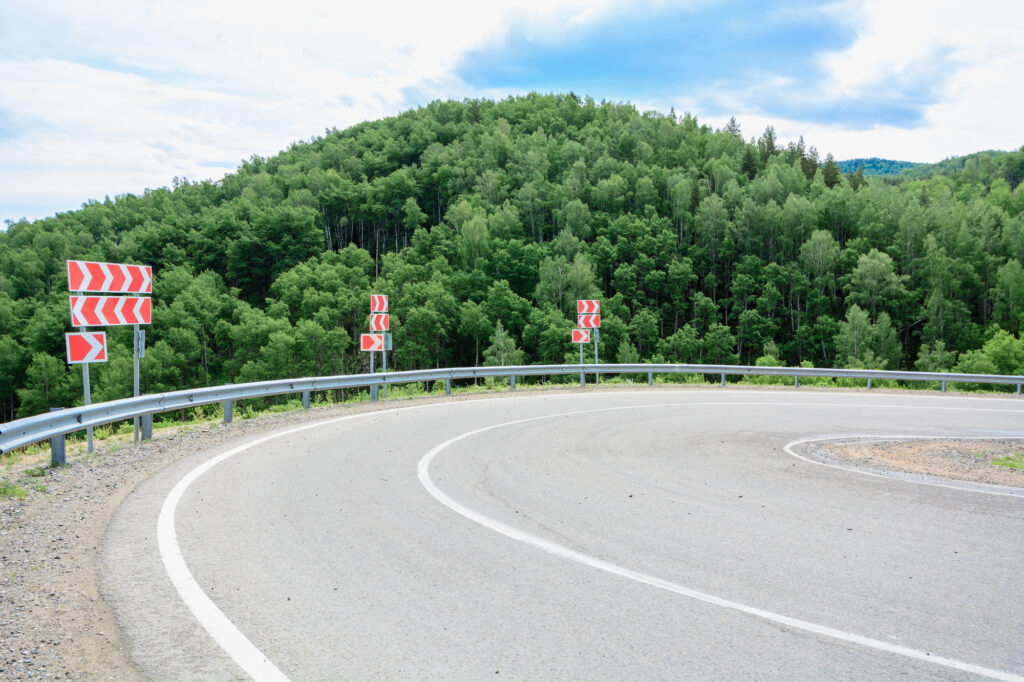
“The wall” is the concrete barrier on either side of the track that keeps racecars from flying off into places they’re not meant to go. It’s basically a highway guardrail at 260 mph. On this national event track, it’s the white barrier outside the yellow paint on either side. And if you look closely at the middle of each lane, you’ll see the darkest strip of rubber—that’s called the groove. (Look how many crew members are up there on the starting line! There are way more people behind that you can’t see. I tow the racecar up to the line and let me tell you—it’s crowded. If you ever hear on the news that someone accidentally ran over someone on the starting line… call me. I might be in trouble. 😂) OK, that doesn’t really happen. I just think I’m funny.
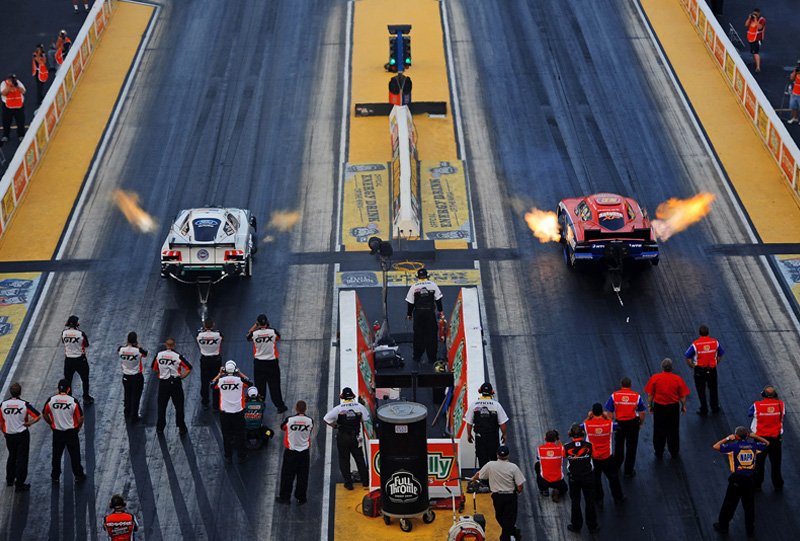

Hitting the wall can happen through no fault of the driver. But I’ve stood on the starting line for countless runs. I’ve asked Bobby a million questions. And I think I’ve learned a thing or two.
Some drivers are simply better at the art of keeping the car in the groove. Experience helps. That means keeping it centered on the rubber where the traction is. Or sometimes in a slightly different spot according to track conditions. A funny car on a surface with no traction is like driving on a hockey rink with your foot planted to the floor. And even with traction, keeping a funny car in the groove is no small feat.
If you’ve never seen an in-car camera from a funny car—not a dragster, but a funny car—go look one up. Watch how the driver fights that tiny steering wheel the entire way down the track. Those cars are beasts, and they do not want to cooperate. We’ll be sharing some in-car footage this season on Bobby Martin Racing. Be ready—it’s fun.
There’s another essential ingredient that separates good drivers from great ones: judgment.
At 260 mph, drivers have only seconds—really fractions of seconds—to make sound decisions. The drivers with good judgment learn when to stay in it and when to lift. One of the most common mistakes I’ve seen is not lifting when they should. When a car gets out of shape and starts drifting toward the wall, some drivers think they can save it. Others are so deep in race mode that they value winning over safety. I get it. We’re competitive. But too often, that split-second decision teaches a brutal lesson: it’s better to lose the run and be able to race another day. One of the things that gives me peace is Bobby’s good judgement; I stand on the line, and he’s proven it to me over and over again.
Stay in the Groove
Earlier I said that racing lessons mirror life lessons. Life, just like drag racing, needs walls. Guardrails.
Guardrails don’t exist to keep us from living boldly. They exist so we can live boldly—without destroying ourselves or the people around us. Think about it. Living life—especially a bold life—without guardrails is like sending a two-year-old out into the world and saying, “Good luck.” Think about it; we need guardrails regarding a lot of things: alcohol, food, drugs. And since this is a blog about marriage and relationships, let’s get specific. I’ve had the privilege of counseling couples in crisis. Anyone who’s done that for any length of time knows one of the most devastating regrets people carry is infidelity. And for many couples, it feels like it came out of nowhere. Bobby and I have been married 37 years. I cannot imagine wanting anyone else. But we’re not arrogant enough to think, that could never happen to us.
Why would we be any different from the good, sincere people we’ve counseled?
So early in our marriage, we decided to put guardrails in place. Not because we don’t trust each other. But because we deeply love and honor each other. I’m not suggesting our guardrails for you. Everyone should decide their own. But I’ll be transparent and share ours, in case it helps you think through yours.
Here’s Our List
Stay in the groove.
Pay attention; use good judgement. If something is pulling you out of the middle of the track and you’re starting to see the wall, lift off the throttle. For instance, if a coworker or friend shares that their marriage is struggling and starts saying things that feel… off? Tell your spouse and create distance. And if you feel that pull? Same rule applies.
Fight the beast.
Sometimes staying in the groove takes a fight. Addiction? Get help. Distance in your marriage? Get counseling. Is someone stealing your spouse’s attention? Fight for them. Do what it takes to get your relationship back on track. (Yes, that pun was intentional.)
Spend time together.
We all need to feel loved, wanted, and chosen. Date nights are not optional—they’re maintenance. Check out the Date Nights category here for ideas.
Put on your armor.
Read God’s Word. Pray for your spouse and with your spouse. Personally, I’ve found nothing more intimate than praying with Bobby. Nothing.
Keep it hot.
If the bedroom needs attention, make it a priority. See a counselor. Take a couples-only trip. Talk honestly about what you need from one another. And ladies—this matters: According to Psychology Today’s article “The Truth About Men and Sex,” sex isn’t just physical for men. It’s deeply emotional. Sexual connection makes them feel loved, safe, and bonded. Being desired by their partner can be the most reassuring part of their relationship. It’s not “just sex” to him.
Avoid significant alone time with the opposite sex.
This one makes people uncomfortable. We get it. But we’ve agreed to avoid it whenever possible. Not because we think we’re irresistible—but because intimacy builds connection. And that time belongs first to your spouse. If I’m going to have a best friend who’s a man, that man will be Bobby.
Avoid all secrets.
We know each other’s passwords. Phones are wide open. Bank accounts are shared. Nothing is off-limits. It makes surprises harder—once, Bobby figured out a gift because ads for guitar amps started following him around—but we’ll take transparency over secrecy every time.
Remember: the grass isn’t greener.
Don’t compare your partner to others. Everyone is flawed. You just know your spouse’s flaws better.
Keep private feelings private.
Don’t emotionally confide in someone of the opposite sex. Emotional affairs are real and dangerous. If you’re tempted to open up to someone else, ask why you’re not opening up to your partner. Make them your #1, always.
Don’t speak badly about your spouse.
Talk them up. Venting to others won’t fix anything. Save hard conversations for each other—or a counselor.
Never flirt with anyone but your partner.
Never. Ever. Ever. It’s not harmless, and it’s not innocent.
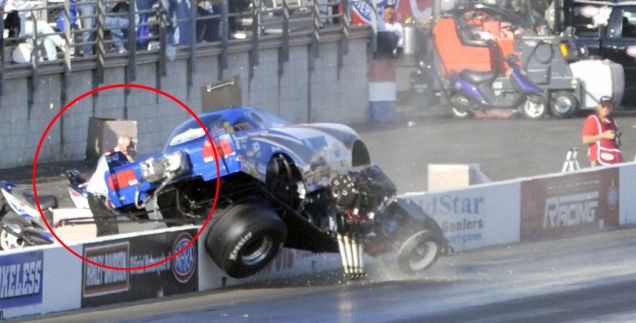
Take a look at the photo below of a funny car crash.
The NHRA governs funny car racing with detailed rules: engine displacement, blower drive limits, fuel type, safety equipment, chassis specs, and body dimensions are all tightly controlled. Before any pass, officials inspect the car. If it doesn’t meet the rulebook, it doesn’t race. Among all forms of racing, drag racing has earned a reputation worldwide for getting safety right.
So what you’re seeing here is highly unusual; I’ve truly never witnessed anything like it. Still, the lesson is unmistakable.
That 3,800-horsepower monster is straddling the wall. Look closely—there’s a man just on the other side of that wall circled in red. And the photographer in front of the car? Both men narrowly missed disaster. Everyone walked away.